
No Talbot 72-Hour Release Feed
Talbot County Corrections publishes no rolling 72-hour list. Its linked JailTracker roster is built for people currently housed at the Talbot County Detention Center. The reviewed county, Corrections, Sheriff, and vendor pages contain no filter for releases over the past three days. They also contain no weekend archive or downloadable release ledger.
This distinction prevents a common error. A name seen Friday but missing Monday may reflect release to the community, a transfer, a data correction, another name spelling, or lag. It cannot be entered into a homemade release list without affirmative evidence. Talbot County Corrections is responsible for the local custody event. The Sheriff keeps its own incident records but does not operate the jail.
Check Talbot 72-Hour Releases
Work from the time span and the person’s identifiers. A request framed as “all answers about who got out” may ask the county to create a new compilation or answer a question. A request for existing discharge records from a stated start and end time is more precise. When one named person is at issue, include the full name, date of birth if known, booking number, and related court case number.
- Check JailTracker to see whether the person is displayed now. Treat the result only as a current-custody check.
- Call Talbot County Corrections at 410-770-8120 for process guidance and the correct route to a durable record.
- Search Maryland Case Search across Talbot District and Circuit courts for events within the three-day span.
- Review Maryland VINE for the named person and any custody-change alert tied to the correct relationship.
- Submit a bounded request through the Talbot County PIA process for the existing booking, discharge, or transfer record.
If the record shows a state transfer, switch to DPSCS sources for the later custody episode. Use BOP only when federal custody is documented, and ICE ODLS only when immigration detention is supported. A Talbot roster disappearance does not by itself justify searching every system or claiming that the person returned to the community.
For a same-day question instead of a multi-day span, the Talbot 24-Hour Releases page focuses on commissioner decisions and current-day verification.
Talbot 72-Hour Record Fields
Talbot does not expose three-day release columns online. The field table instead identifies the existing information a focused request may seek. Disclosure is not guaranteed. The county may apply exemptions, redact protected material, charge permissible costs, or state that it has no responsive record.
| Record element | Why it matters in a three-day review |
|---|---|
| Name and booking identifier | Separates people with similar names and ties the event to one custody episode. |
| Booking date | Shows when the Talbot episode began, even if release occurred in the selected three-day range. |
| Actual discharge date and time | Places the recorded departure within or outside the bounded period. |
| Release reason or type | May identify bond, court order, time served, sentence end, or another recorded basis. |
| Destination or receiving agency | Helps distinguish community release from a transfer, if that field is disclosable. |
| Case number | Connects the event to court orders, sentence entries, and later public case activity. |
Use dates with labels. The court-order date, VINE alert time, roster update, and actual discharge time may differ. Only the originating custodian can establish its physical custody event. A charge-row notation about bond or release should also be read in context because another charge, warrant, sentence, or detainer may keep the booking open.
Talbot Weekend Release Verification
A three-day period is most useful when ordinary office hours do not match the custody event. The District Court Commissioner station is inside the Talbot County Detention Center and has published on-call overnight and weekend coverage. A bond or release-condition decision can therefore occur when a clerk counter is closed. Jail staff must still verify all holds and complete release processing.
Do not assign a made-up Monday posting rule or weekend lag. Research found no official JailTracker update cadence, no promise of real-time operation, and no county guarantee that a release appears in any public list. If a weekend decision matters, read the commissioner or court event, check VINE, and seek the discharge record. The three sources form a sequence rather than interchangeable proof.
Case Search should cover both local court levels. District Court handles misdemeanors and certain felonies, while Circuit Court handles more serious and jury matters. A remote docket can record a bond or release order, sentence event, dismissal, or probation term. Some non-conviction outcomes may later leave remote view even when a public clerk file remains. Search the correct court, preserve the case number, and use the clerk’s file when the online summary is incomplete.
Note: Weekends broaden the useful search span, but they do not change which agency records the actual Talbot discharge.
Talbot Release Roster Retention
The Talbot JailTracker configuration carries two settings that must be read together. showCurrentOffendersOnly=true controls the public view. The separate releasedRetentionDays=400 value appears to concern vendor-side retention, but it does not expose those records to public search. It also does not establish the county’s legal retention schedule for the underlying file.
The agency configuration is useful technical evidence, not a three-day release database. The county has not stated that the public can search 400 days of releases. Online visibility and agency record retention are different questions.
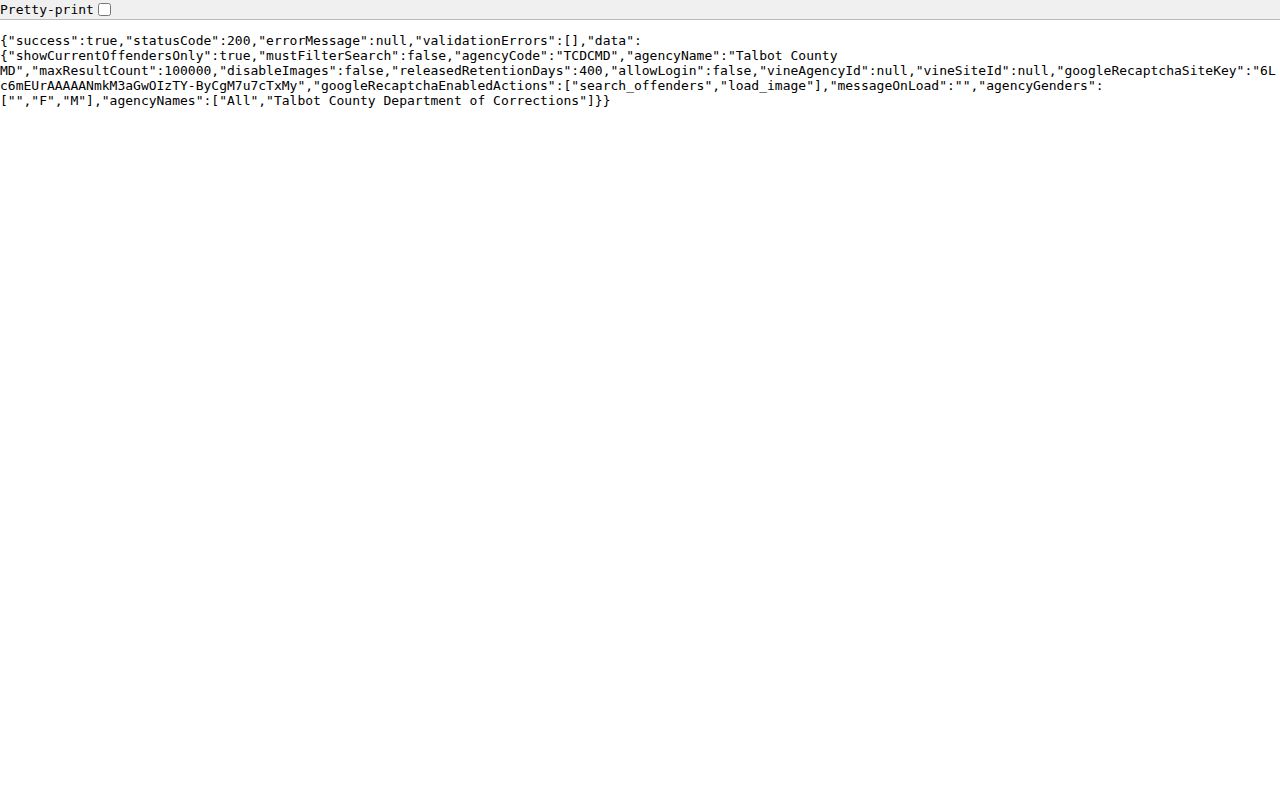
The captured settings explain why released records are absent from the public interface even when nonpublic data may remain in the system. Access to an existing discharge record still runs through the county’s formal request process.
Talbot Three-Day Records Request
The county PIA form is the documentary fallback for a three-day period. Address it to the county representative through the published form and current contact channel. Ask for records that already exist, such as intake sheets and discharge entries, instead of asking the custodian to research a narrative answer. Maryland law generally calls for prompt action and ordinarily a response within 30 days. If more than ten working days are expected, the agency provides the timing, fee, and reason notice required by the statute.
The first two hours of search and preparation are free under Maryland’s fee rule. Costs after that must have a reasonable link to the actual work. A narrow date range, clear identifiers, and named record types can reduce search time. Exemptions, redaction, and nonexistence remain possible.
A useful request can ask for the recorded actual discharge date and time, recorded release type, and transfer destination if disclosable. It may also seek the intake sheet needed to connect the discharge to the correct booking. Avoid asking the custodian to decide whether the person was “free” during the period. That conclusion can hide a transfer or another hold, while the existing fields preserve the narrower facts.
The official Talbot PIA page shows the request channel used for county Corrections records.
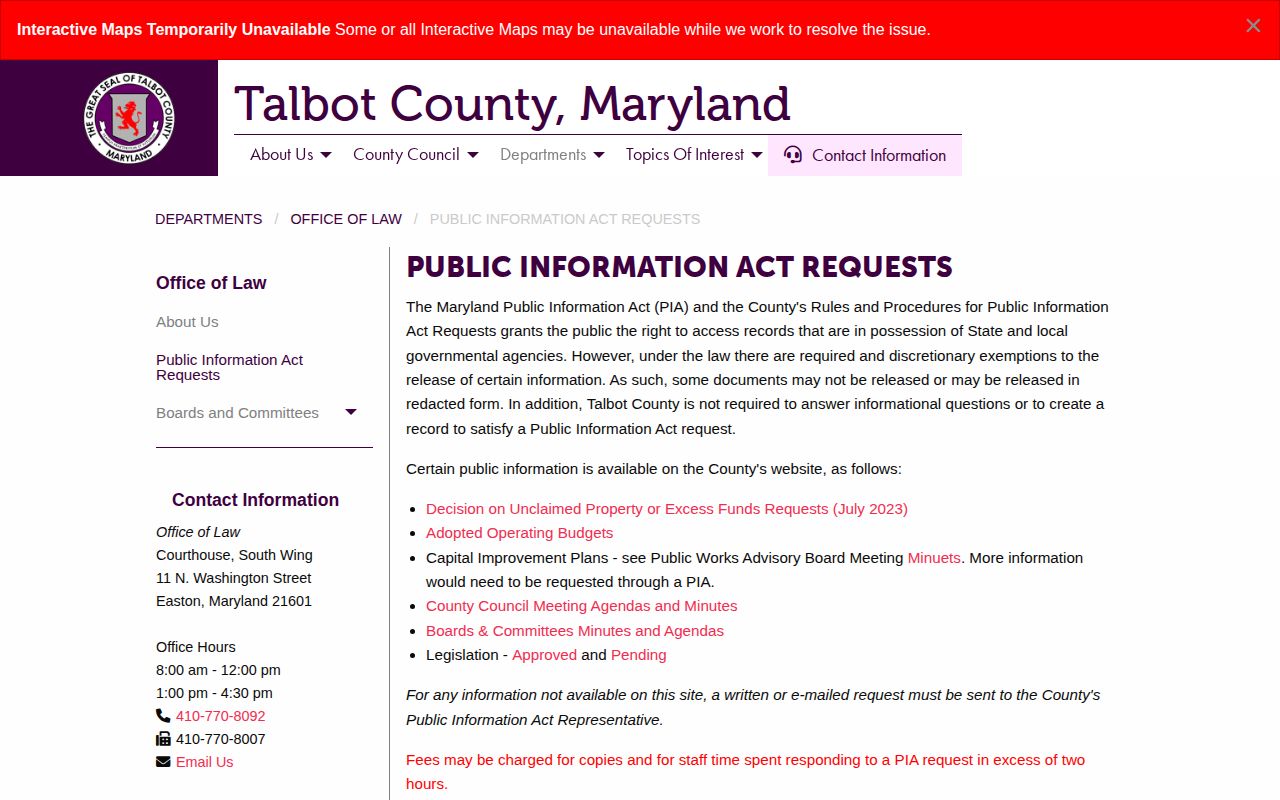
This county page is the appropriate starting point for discharge and booking records. Sheriff Records has a separate fee schedule for Sheriff incident files and should not receive a jail-record request merely because a deputy made the arrest.
Released or Transferred from Talbot
A complete three-day review separates the end of Talbot custody from the person’s next status. Community discharge can follow bond, recognizance, time served, sentence expiration, dismissal, or another lawful order. Transfer means a different custodian took control. The latter is not a community release even though the person disappears from Talbot’s current roster.
VINE can add a custody-change notice when the participating source supplies the event. Its exact labels and release reason may vary. Registration also follows each system relationship, so a person moving from the Talbot jail to Maryland prison requires a new registration for that stage. Use the alert to identify an event worth checking, then ask the originating custodian for the record that defines it.
- Current Talbot match
- The person is displayed as housed by Talbot at the source’s update time.
- Talbot discharge record
- The local agency recorded the custody episode’s end and may state the type or destination.
- DPSCS match
- The person is currently displayed in covered Maryland state custody, not released from all custody.
- BOP released result
- The person left BOP custody on the shown date, but another custodian may still be involved.
Write the narrow fact each source supports. “Not displayed on this date” is more accurate than “released” when no affirmative departure record is available. That phrasing protects the distinction between a public roster gap and a recorded custody outcome.
Public Record Search
Sponsored Results